
Thinking about reducing your dependence on glasses or contact lenses? Laser vision correction may be an option worth exploring. Two commonly performed procedures are LASIK and PRK. Both procedures use laser technology to modify the cornea and improve refractive vision problems, but they differ in their surgical techniques and recovery periods. Understanding these differences can help you prepare for an informed discussion with an eye care professional.
What Is LASIK?
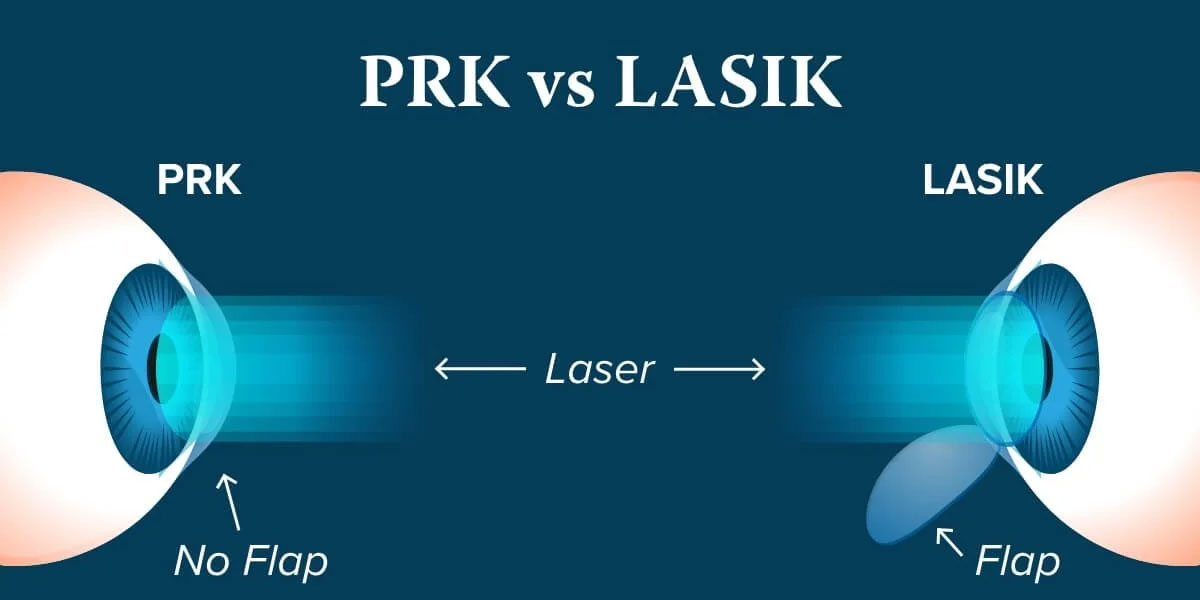
LASIK, or Laser-Assisted In Situ Keratomileusis, involves creating a thin flap in the cornea. A laser then reshapes the underlying corneal tissue to correct vision problems such as nearsightedness, farsightedness, and astigmatism.
One major advantage of LASIK is its relatively quick recovery. Many people experience noticeable improvements in their eyesight within 24–48 hours, though the recovery process and final visual outcomes differ from person to person. However, LASIK may not be suitable for people with certain corneal conditions or insufficient corneal thickness.
What Is PRK?
PRK, or Photorefractive Keratectomy, corrects refractive errors by removing the outer layer of corneal cells before reshaping the underlying tissue with a laser. Unlike LASIK, PRK does not involve creating a corneal flap.
PRK may be an appropriate alternative for certain individuals who are not ideal candidates for LASIK due to corneal thickness or other eye-related factors. However, the surface layer needs time to regenerate, so initial discomfort and visual recovery generally take longer than with LASIK.
LASIK vs PRK: Understanding the Differences
LASIK typically offers faster visual recovery and less initial discomfort, but it involves creating a corneal flap.
PRK avoids a corneal flap and may suit certain patients with thinner corneas or particular lifestyle considerations, but recovery is usually slower and requires careful follow-up.
LASIK and PRK can both involve side effects or complications, such as eye dryness, light sensitivity, halos around lights, infection, or residual refractive errors. Neither guarantees perfect vision or eliminates the possibility of needing glasses later.
How Do You Choose the Right Procedure?
The best option depends on your prescription, corneal thickness and shape, tear film, overall eye health, age, and lifestyle. A comprehensive eye examination helps assess your suitability and identify factors that may influence surgical outcomes.
At Envision Optometry, surgical co-management can help patients navigate appropriate pre-operative assessments and post-operative follow-up in coordination with their eye surgeon.
Visit www.envisioneyes.ca to learn more about surgical co-management and arrange an eye examination to discuss your vision needs.